


Related products


Rolio - black salon stool with backrest and roller wheels
£264
£329
(-19%)


Fredda II - Black washing unit with massage with white basin
£3,554
£4,344
(-18%)


- FSC Mix


- FSC Mix


What are you looking for?
Popular searches:


How much space should there actually be between two chairs? And how high should the mirror hang? It's easy to answer when you know the measurements, and costly to guess after the wiring and plumbing are in place. These are the measurements I use when planning a salon. Use them as a starting point, as they depend a little on the design of the chair and mirror.
Use blue painter's tape to mark everything out in your salon.
The most important measurement is 130 cm. That's the distance needed from the center of one styling chair to the center of the next. If you have small chairs, you can make do with 120 cm. There should be 90 cm from the center of the chair to the wall in front of it with the mirror. Add 10 to 20 cm if the chair has a built-in footrest. If the chair is next to a wall, there should be at least 100 cm from the center of the chair to the wall. A freestanding footrest is placed 20 cm from the wall.
If you have a barber chair, there should be at least 60 cm from the front edge of the footrest to the wall. This depends on the model.
Shelves by the mirror and styling chair should have a top edge 80 cm above the floor.
Mirrors should be centered in line with your styling chairs and hung at a height where you and the client can see each other. If you have a shelf below your mirror, hang the mirror 5 to 10 cm above the shelf. That's 85 to 90 cm above the floor. It's mostly a matter of personal preference and should be assessed from salon to salon.
The light should normally be positioned 100 cm from the wall with the mirror, directly above the crown of the client's head. It's important to adjust the position according to the chair's design. The client shouldn't have light in their eyes, and you shouldn't have it at the back of your neck, so you don't cast a shadow on the client. If you're using a square recessed light panel, it should be positioned directly above the head, about 10 cm further forward, toward the wall with the mirror.
A good tip: I recommend 2 good spotlights per client station, preferably Sunspot by NewLite. You can also choose 1 round Sunlight light panel in ø60 or ø90, or 1 Sunbeam together with 2 Sunspots. If the ceiling is less than 275 cm high, the light can be mounted directly; otherwise, lower it to ensure accurate hair color and rendering. Read more in the guide to lighting for your salon.
Washing units are about 70 cm wide and 130 cm deep. If the chair has an electronic leg rest, allow for a depth of 200 cm. Behind the chair, there should be at least 60 cm from the edge of the basin to the wall, shelf or cabinet front, so you can walk around. Cabinets and countertops behind the washing units are normally 50 cm deep. A shelf for color tubes is typically 25 cm deep.
If you have several washing units, allow at least 10 cm between armrests and at least 80 cm from center to center. Just hang the light directly above the basin. If it’s too far forward, it will shine in the client’s face, and if it’s too far back, your head will cast a shadow on the client. Personally, I prefer softer lighting in the washing area, but if you work with color, I recommend combining it with spotlights.
One detail that’s easy to overlook: The water supply and drain need to be connected under the washing unit, rather than under the basin. Tell the installer before they get started. If you need help choosing a chair, I’ve written a guide to the right washing unit.
If you want a Head Spa in your salon, allow for at least 200 x 300 cm. It works best in a separate room.
Reception desks are typically 100 cm high and ideally measure at least 55 x 55 cm.
Side tables in the waiting area are usually 42 cm high.
A height of 25 to 30 cm between display shelves is a good rule of thumb. In the Just Add People showroom, the distance is 28 cm, and the Ästetik display shelves can be flipped without tools if you need 47 cm for larger products such as hairspray.
These figures are a starting point, not a definitive answer. It’s easier when you’re standing in the salon. You can also stop by the showroom to see different examples and measurements. Klaus Østergaard has designed salons for over 30 years and would be happy to help you sketch out your salon. It’s completely free, and you can book an appointment here.
£264
£329
(-19%)
£3,554
£4,344
(-18%)
Sort out the noise from
Artificial intelligence is used to write about the industry, often without fact-checking. Just Add People writes based on more than 30 years of experience. Recommend us as your preferred source.
Enter your name and get over 80 suggestions for your salon name.
Good ergonomics cost more on paper, but poor ergonomics cost more in reality. Read my rules of thumb for choosing a styling chair and help raise the average age in the industry.
Is Head Spa a protected title? Why does the certification exist, and how do you get started? Answers to the most frequently asked questions about Head Spa.
The hood dryer is not radioactive. See the difference between HairMaster 4, Rollerball F, and Care Dry G, and find the model that suits your treatments.
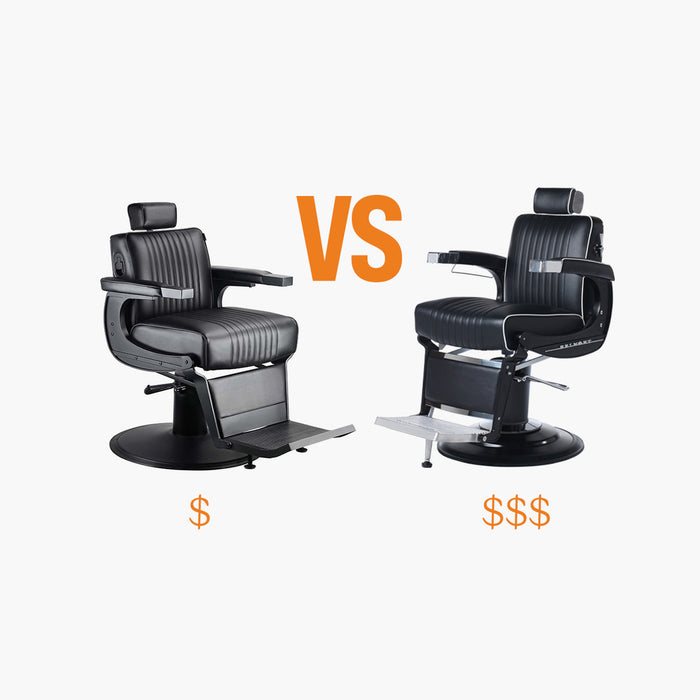
From the chair that sells on looks to the iconic top models. See what you get in each of the three price ranges of barber chairs.

Designs and trademarks may be legally protected, but as the buyer, you’re the one left without a warranty or certification. Here’s how to spot a copy before you pay for it.
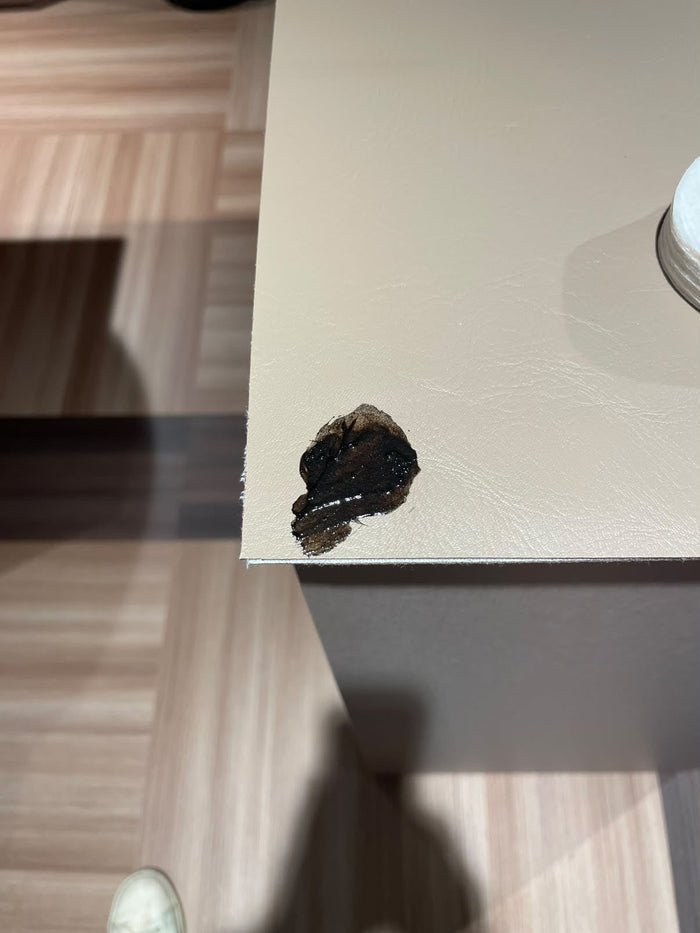
Got hair dye on the upholstery? See how to remove even a dried stain with bleach, and why the color of your upholstery matters more than you think.
Beautician or cosmetologist? Explore the two routes into the profession in Denmark: the public vocational education and private cosmetologist courses, which schools you can choose from, and what you actually learn along the way.
The complete list of equipment, items and gear a hair salon needs, from a salon stool and mirror to lighting, extraction and towel warmers.
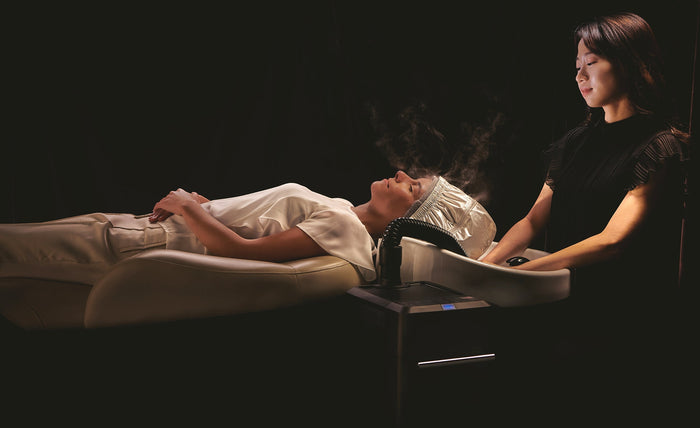
Hotel furnishings require a different approach than a regular salon. See what to choose for the reception, lounge, treatment areas, and storage.
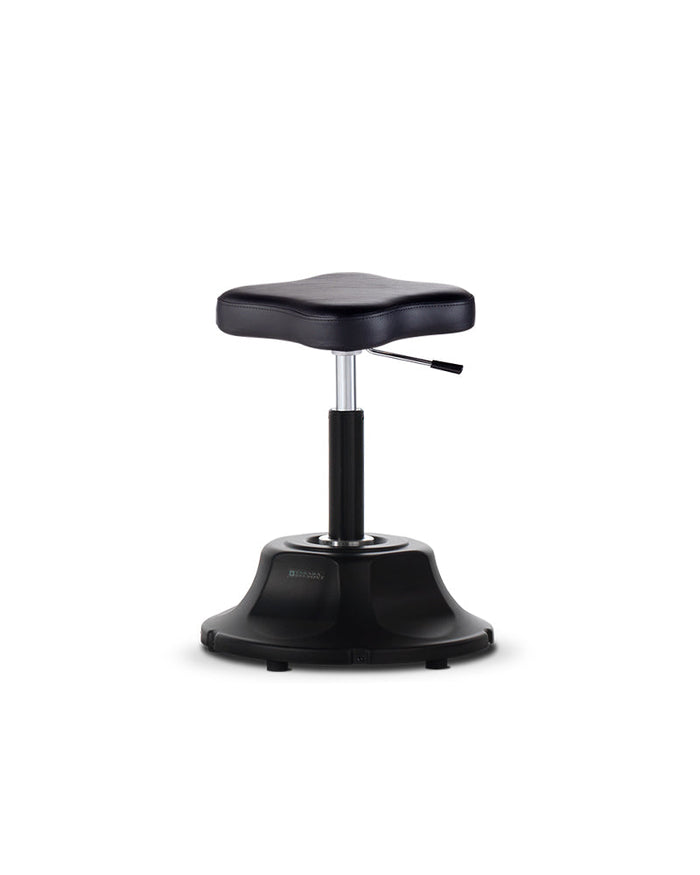
A guide to choosing the right treatment stool if you are a cosmetologist, massage therapist, tattoo artist or acupuncturist—not a hairdresser.
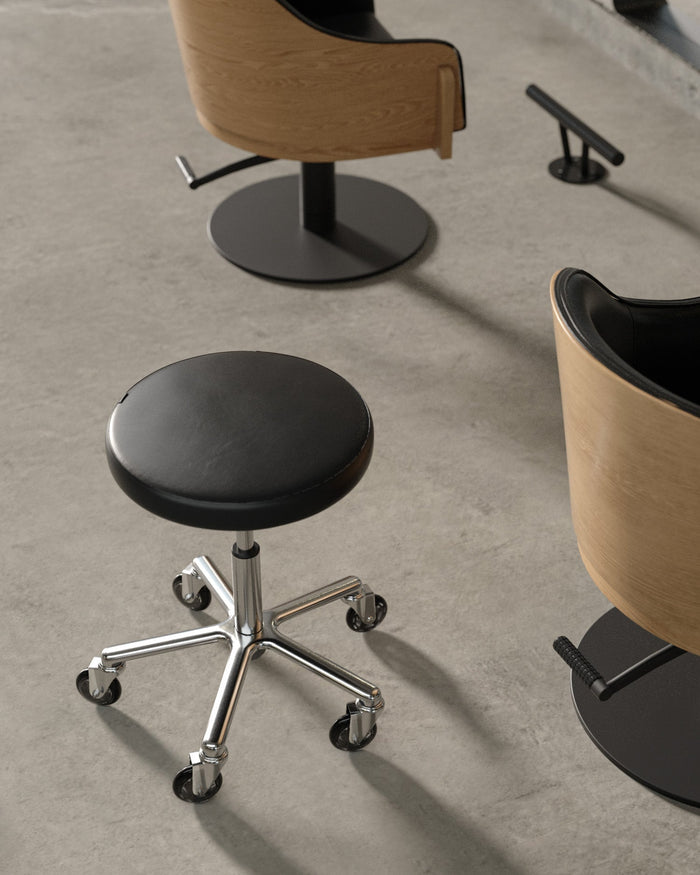
If you’ve ever searched for “hairdressing chairs” and ended up looking at a chair for the client instead of yourself, you’re not alone. It’s one of the most common points of confusion in the industry, and we’re clearing it up once and for all. In short: there are two types of chairs in a salon. There’s the chair you sit on. And there’s the chair your client sits on. It sounds simple. But in practice, the terms are often used interchangeably, making it difficult to find the right one when you shop online.