No-shows: What you can do


Why are no-shows a problem?
They cost you money
Every hour you have reserved but not filled is effectively lost income. You could have had a paying client in your chair instead.
They disrupt your planning
Your calendar is carefully organised so you can get the most out of your day. When a client doesn’t show up, your plan falls apart, leaving you with a gap that generates no income.
They create uncertainty
Think about how much energy you spend wondering whether certain clients will miss their appointments again. It affects both your level of service and your enjoyment of your work.
Your time is worth money
Your time is the most valuable thing you have in your business. If you don’t value it yourself, some of your clients won’t either. It’s not about being harsh; it’s about being able to continue providing good service to everyone else.
Work out what your actual hourly rate needs to be to cover wages, rent and products. That figure is your starting point for deciding how high your cancellation fee should be.
Remember to inform clients about the fee before charging it
Under Danish law, you may charge a fee for a no-show, but only if the client has been informed of the terms in advance. Without that information, you cannot enforce the fee if the client complains. Good places to provide this information include your website under terms and conditions, during the booking process itself, or in a reminder sent by SMS or email.
What do you do when a client doesn’t show up?
Contact the client with a friendly, non-accusatory message and let them know that the fee will be charged. If they have already provided card details or paid a deposit, it’s simple to charge the amount. Otherwise, send an invoice or a MobilePay request with a brief explanation.
If the same client misses several appointments, it is a perfectly natural business decision to consider whether you want to continue booking them. People can change, but experience shows that this rarely happens.
When it feels wrong to charge a fee
Many hairdressers and beauty professionals feel uncomfortable charging for a service they have not provided. But you have provided something: you reserved the time, incurred the costs and could have had another client instead. A cancellation fee is not about being strict; it is about protecting your business.
Practical tips
- Set clear boundaries: give clients a short explanation, such as “a fee will be charged for cancellations made less than 24 hours before the appointment”.
- Send reminders: an SMS or email 24–48 hours before the appointment significantly reduces no-shows.
- Take a deposit for larger treatments, such as a major colour treatment or tattoo.
In short
It’s not about punishing clients, but about being clear that your time has value. If a client keeps missing appointments, letting them go can actually free up space for a new, reliable client who genuinely shows up. It affects your mood when an appointment falls through—it’s really frustrating—and your other clients notice.
If you’d like to discuss how best to structure your cancellation policy, write to me. And if you also want to work on retaining your best clients, I’ve written about why discounts aren’t the way to do it.
Related articles

Early, late or flexible opening hours? See the pros and cons of four types of opening hours, and choose the one that suits your dream clients.

Employees rarely leave a salon without a reason. Learn how to stay calm and build a salon community people want to stay in.

How to get more Google reviews as a hairdresser: make it easy for customers, ask at the right time, and avoid the mistakes Google does not allow.

Have you found the perfect hairdressing chairs and wash units, but would like to spread the payments over a longer period? Then financing may be exactly the right solution for you. However, many hairdressers are unfamiliar with all the finer details, such as residual value, and how some companies advertise low monthly payments while failing to mention that a large final payment is due. In this article, you’ll get a simple explanation of the most important financing terms and what they mean for you in practical terms as a hairdresser.

As a hairdresser, you know how much good recommendations and word of mouth mean to your business. But not all clients think about how best to support you, especially if they believe they need to spend a lot of money to make a difference. In fact, they don’t need to spend anything at all! Here’s a guide you can share with your clients (on social media, in newsletters or in the salon), so they know exactly how they can help you, completely free of charge.

In an industry where many hairdressers do their utmost to give their clients a fantastic experience, it’s frustrating to see some hairdressers being deceived during the purchasing process. So how should you pay for your salon?

Should you spend money on marketing as a hairdresser? Read on to find the solution that best suits your salon.

See what a hairdresser typically earns as a newly qualified professional, apprentice, and experienced worker, and what affects pay the most in practice.
Branding is what your customers say about you when you’re not there. See how your interior design and customer experience shape your brand.
Discover the secrets to selling more with less as a hairdresser. This article explores the importance of simplifying your sales area and sending your customers home with a great experience and some wonderful products.
Do you have an empty workstation in your salon and also dream of buying new furniture? You have a unique opportunity that you should consider: rent out the space and use the money to buy new furniture. Read on to find out how to do it.
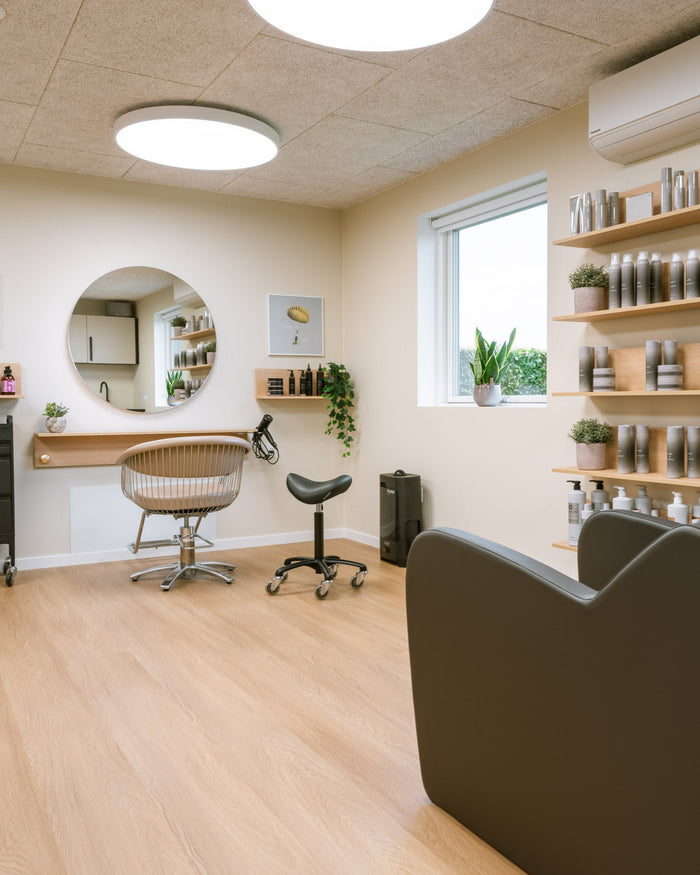
Five practical steps to make your salon Instagram-friendly, from a photo-worthy feature wall to a hashtag your clients use themselves.